Lake Creek Species Field Guide
Tap a species card to learn how to identify it, when it runs, and the different ways we fish for it here at Lake Creek.
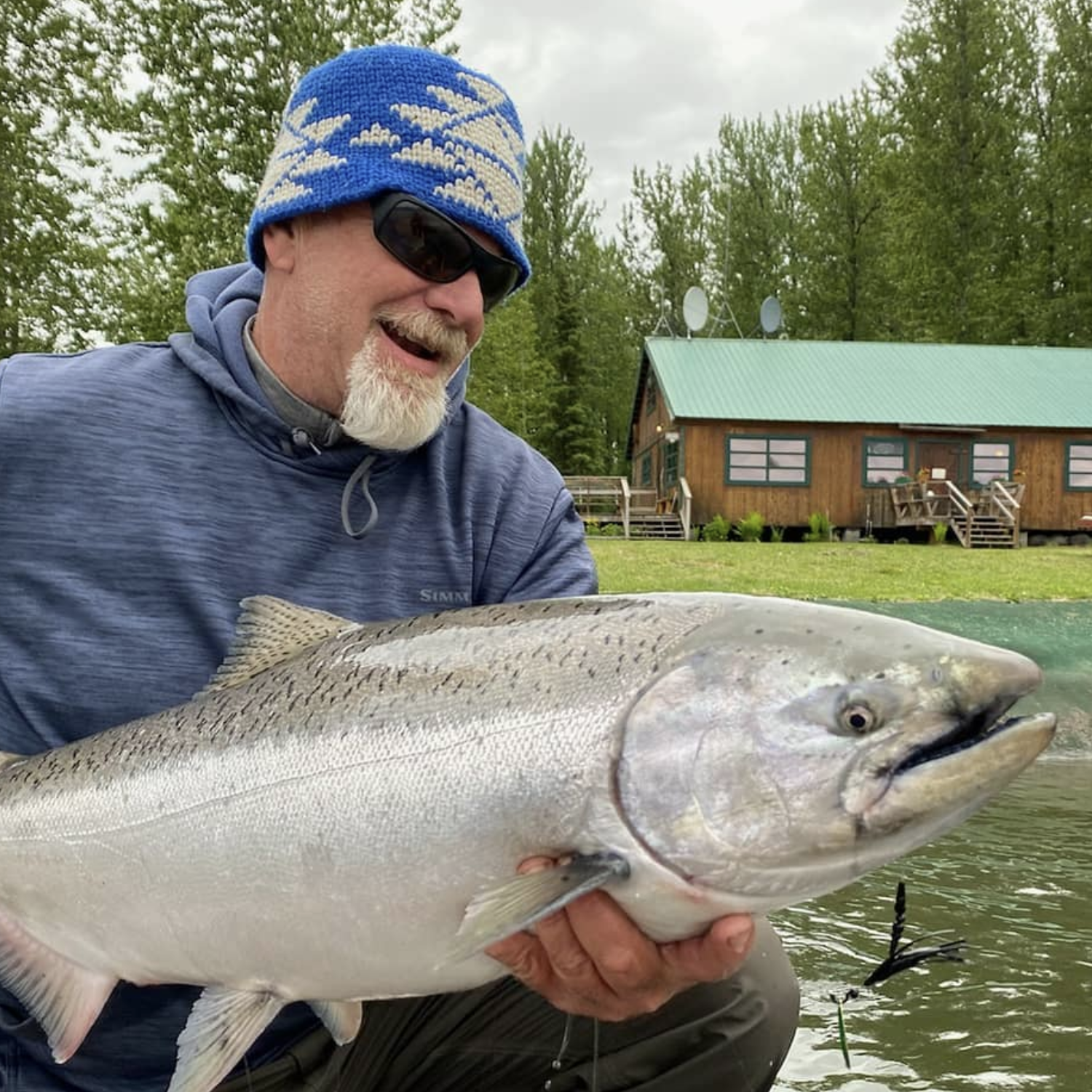
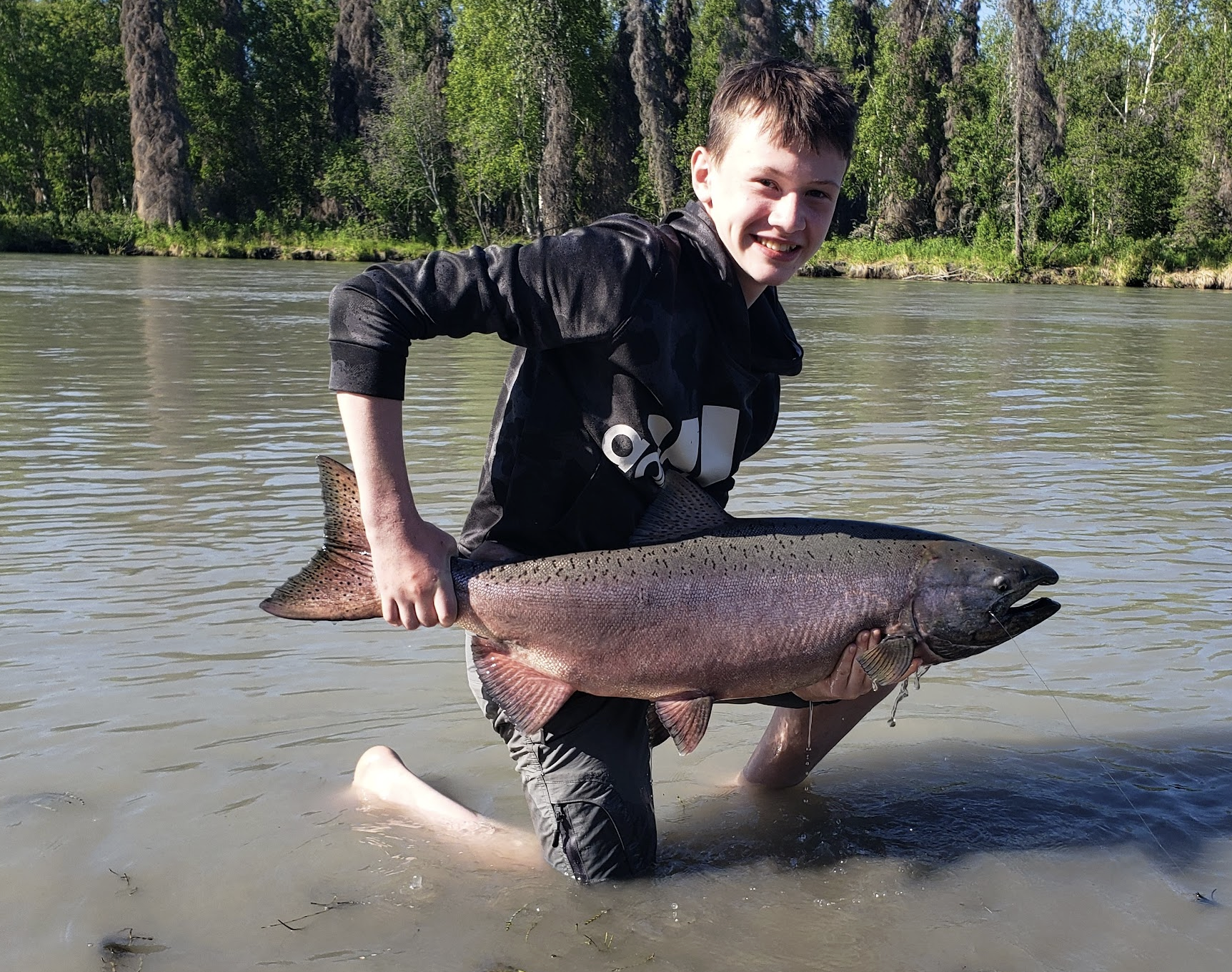
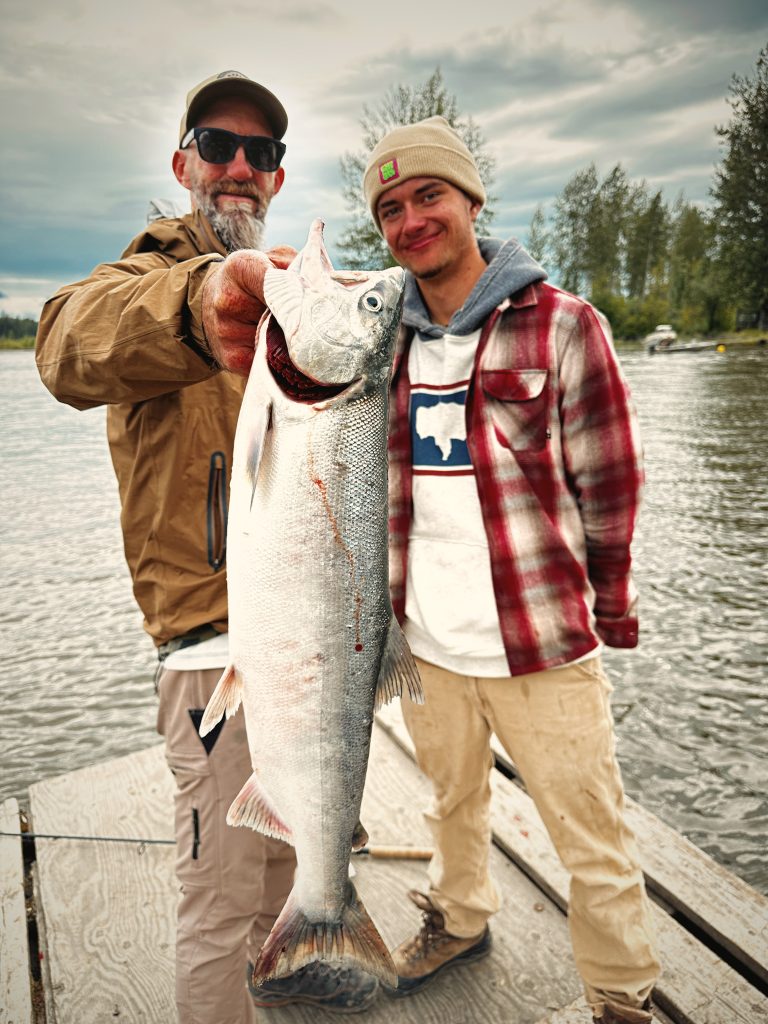
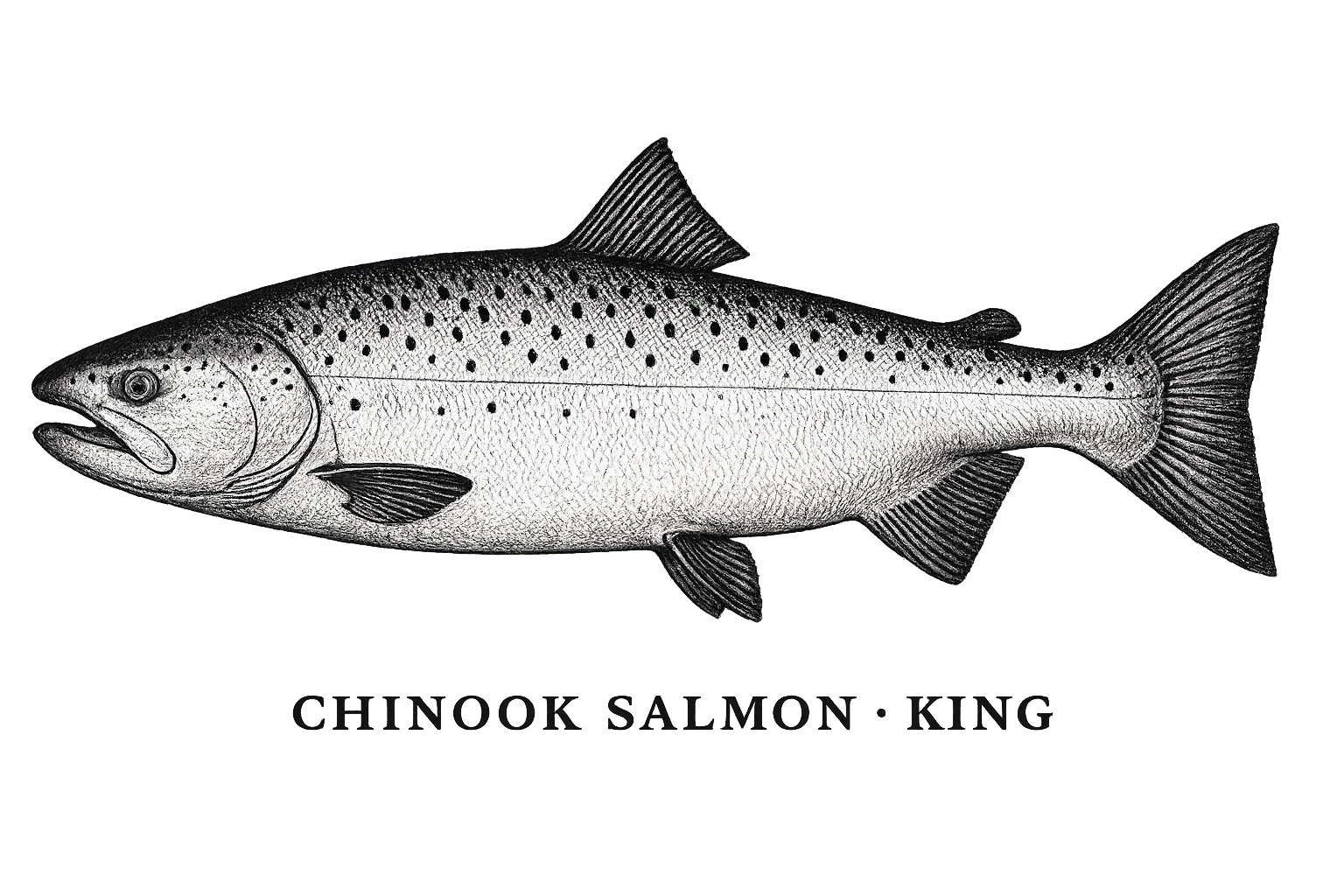
King Salmon · Chinook
The early summer Heavyweights
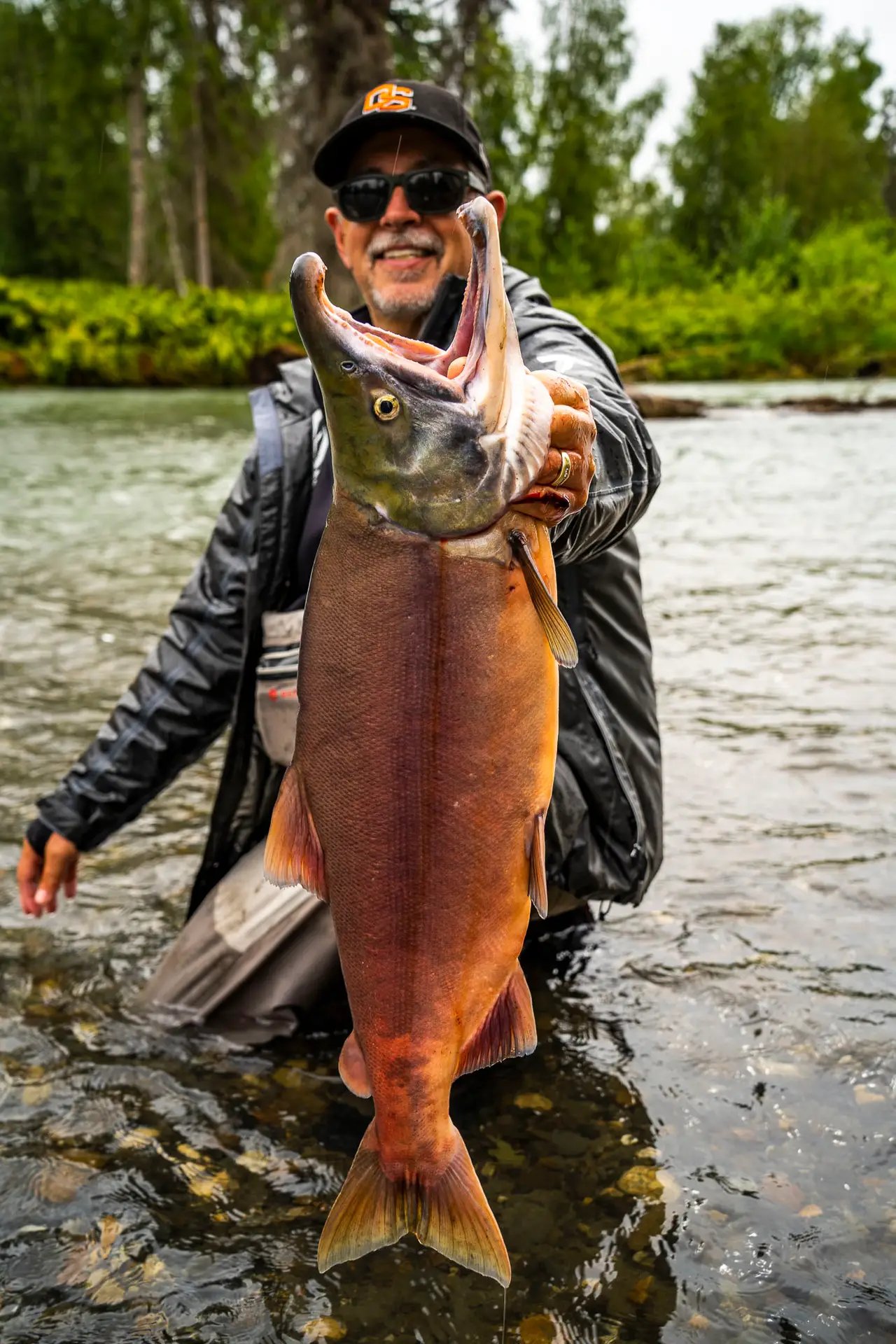
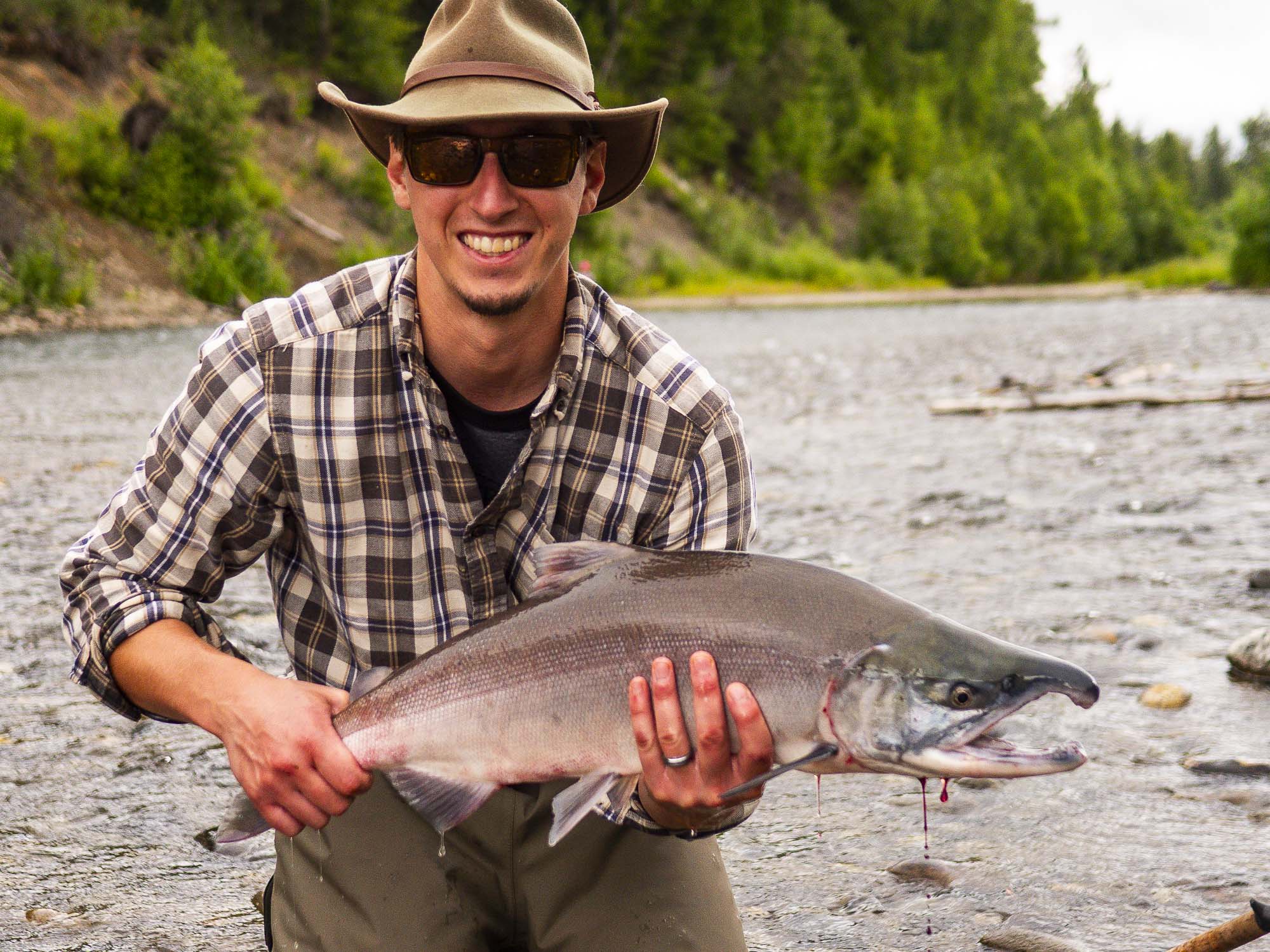
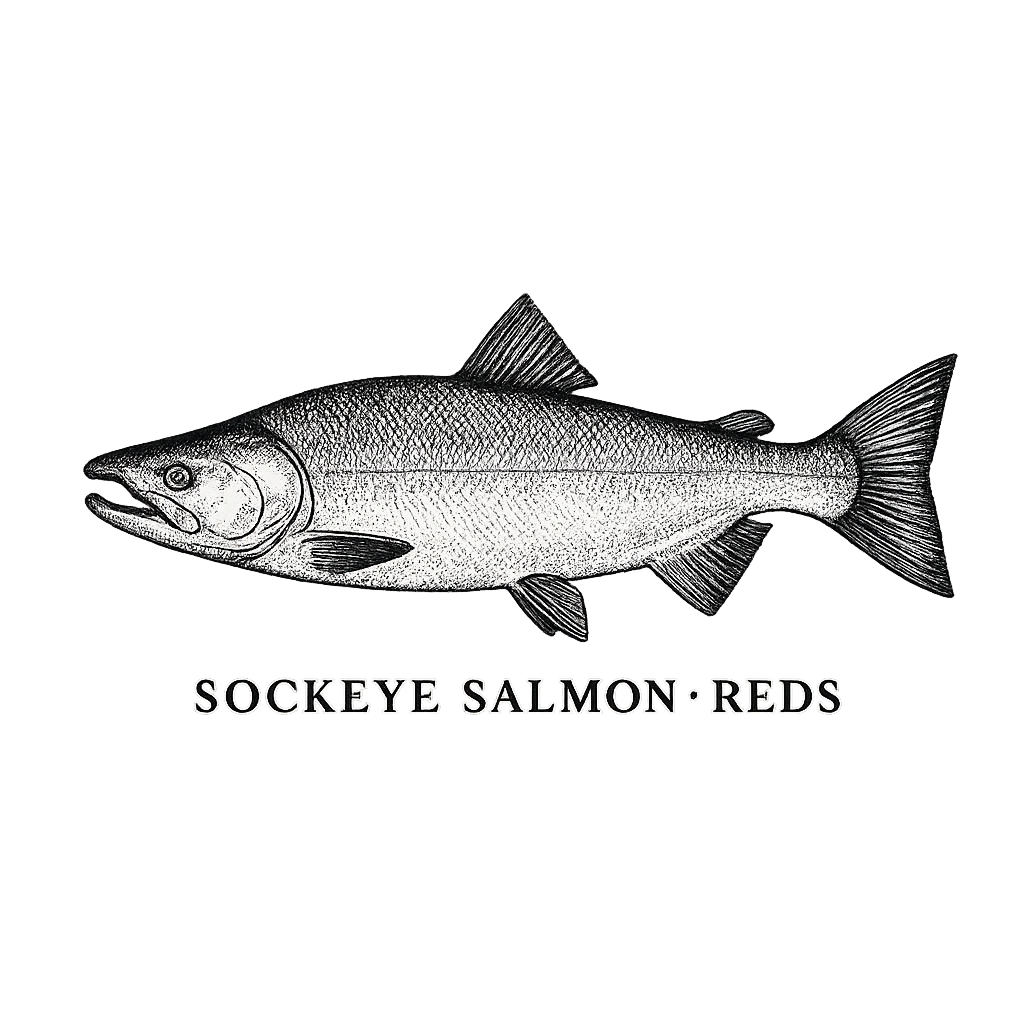
Sockeye Salmon · Reds
Big runs in late July
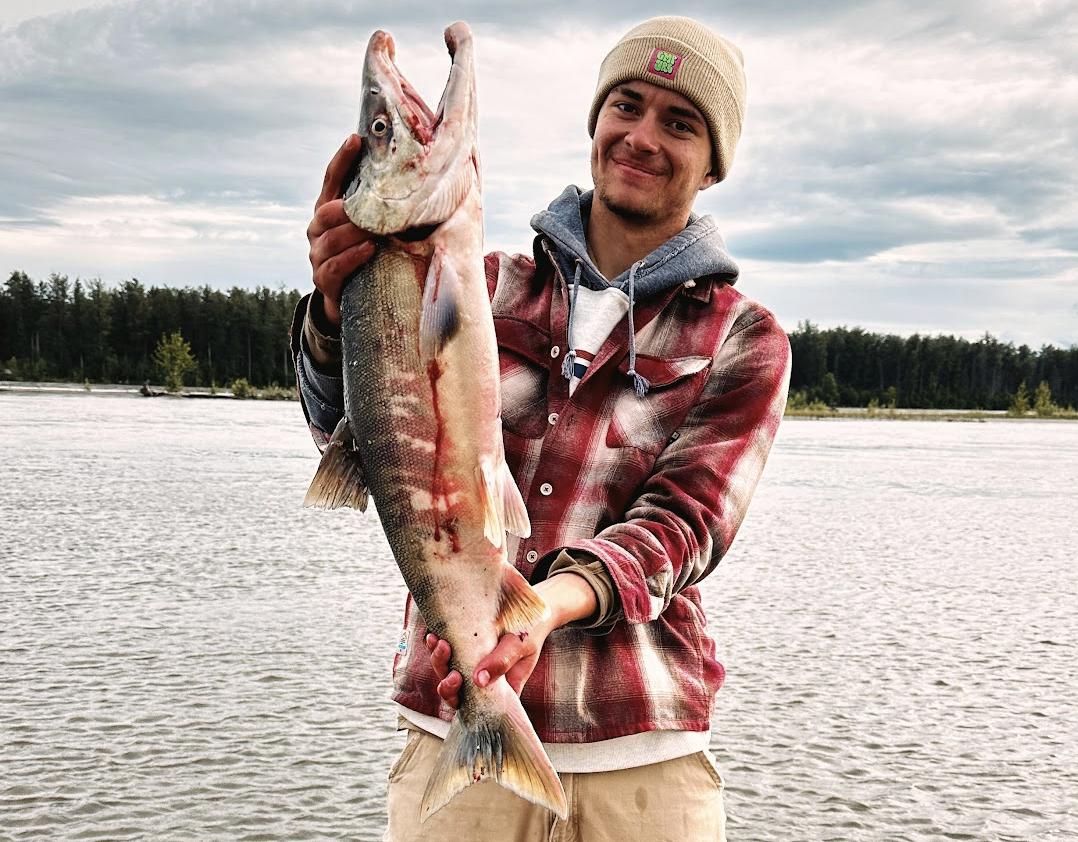
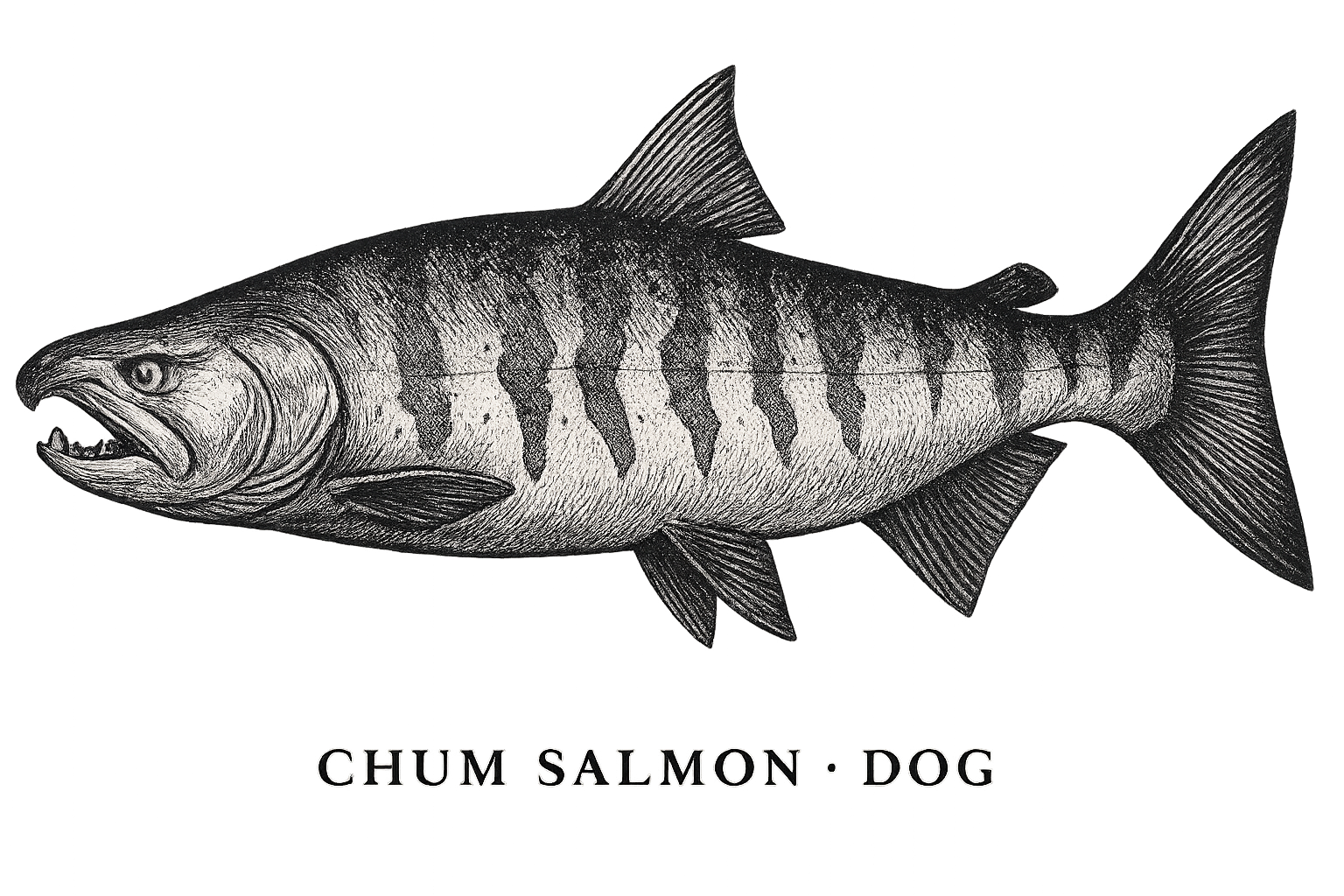
Chum Salmon · Dogs
Striped bulldogs
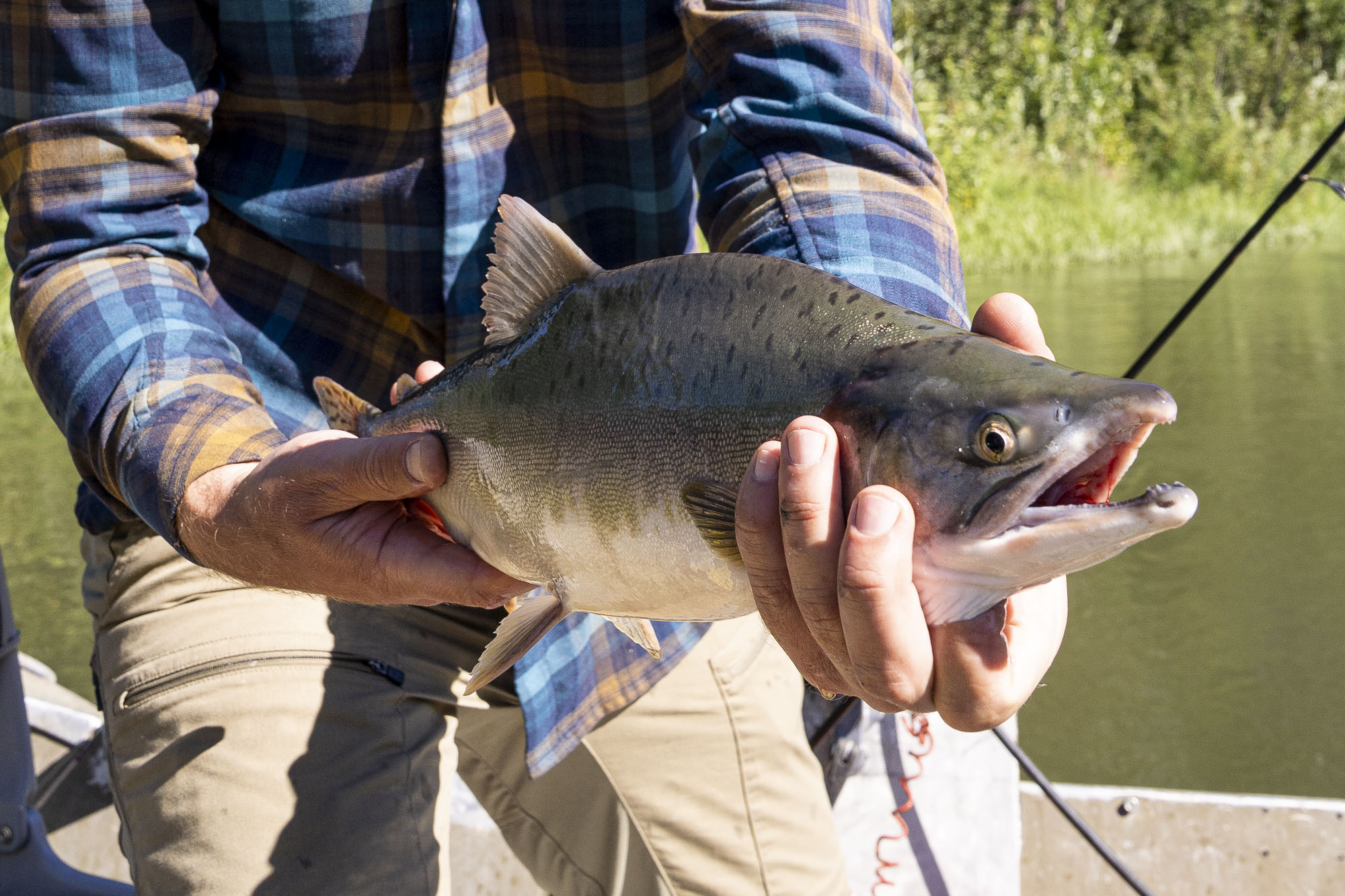
Pink Salmon · Humpy
Plenty and Fun!
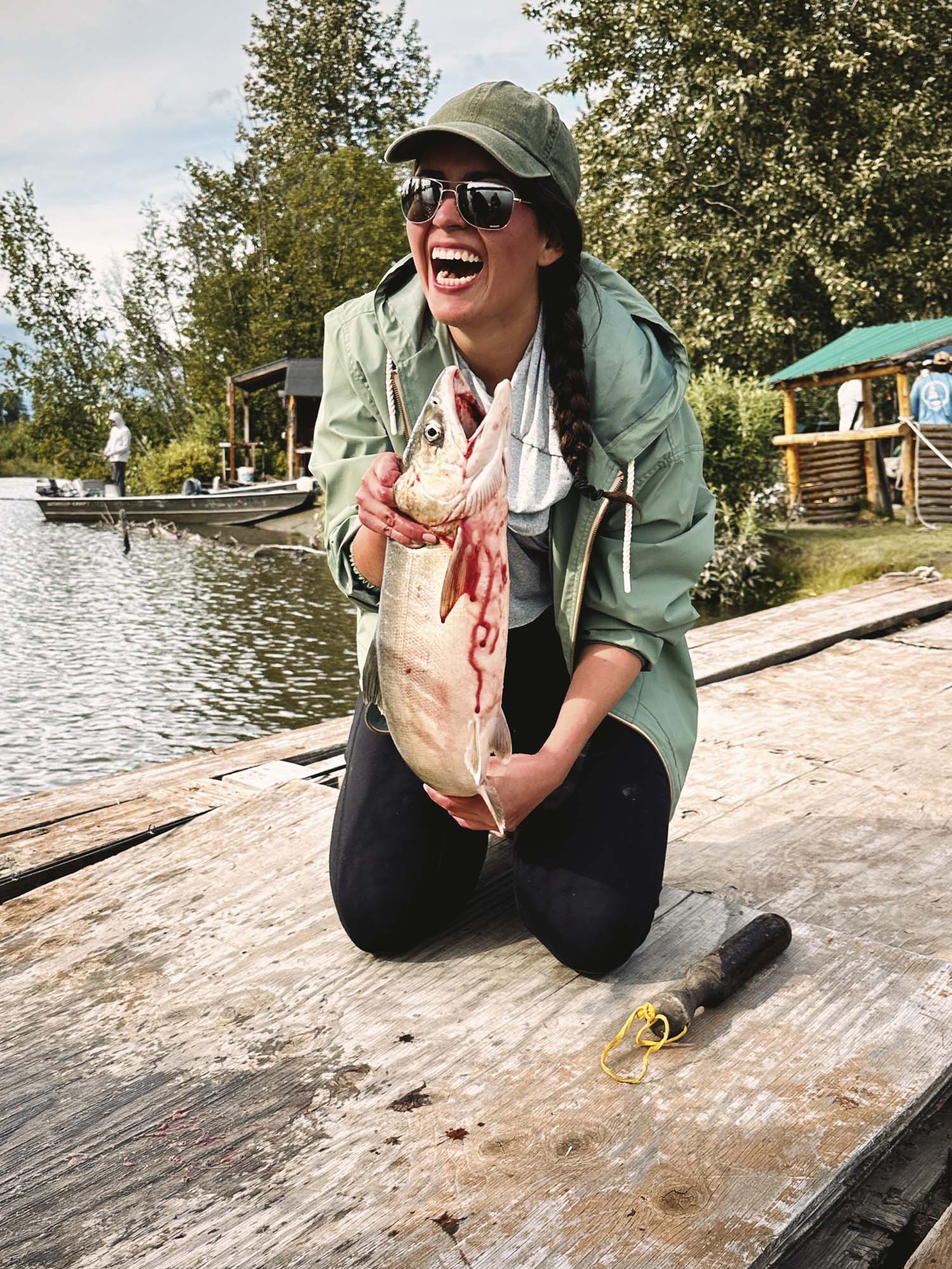
Coho Salmon · Silvers
Aggressive and Aerial
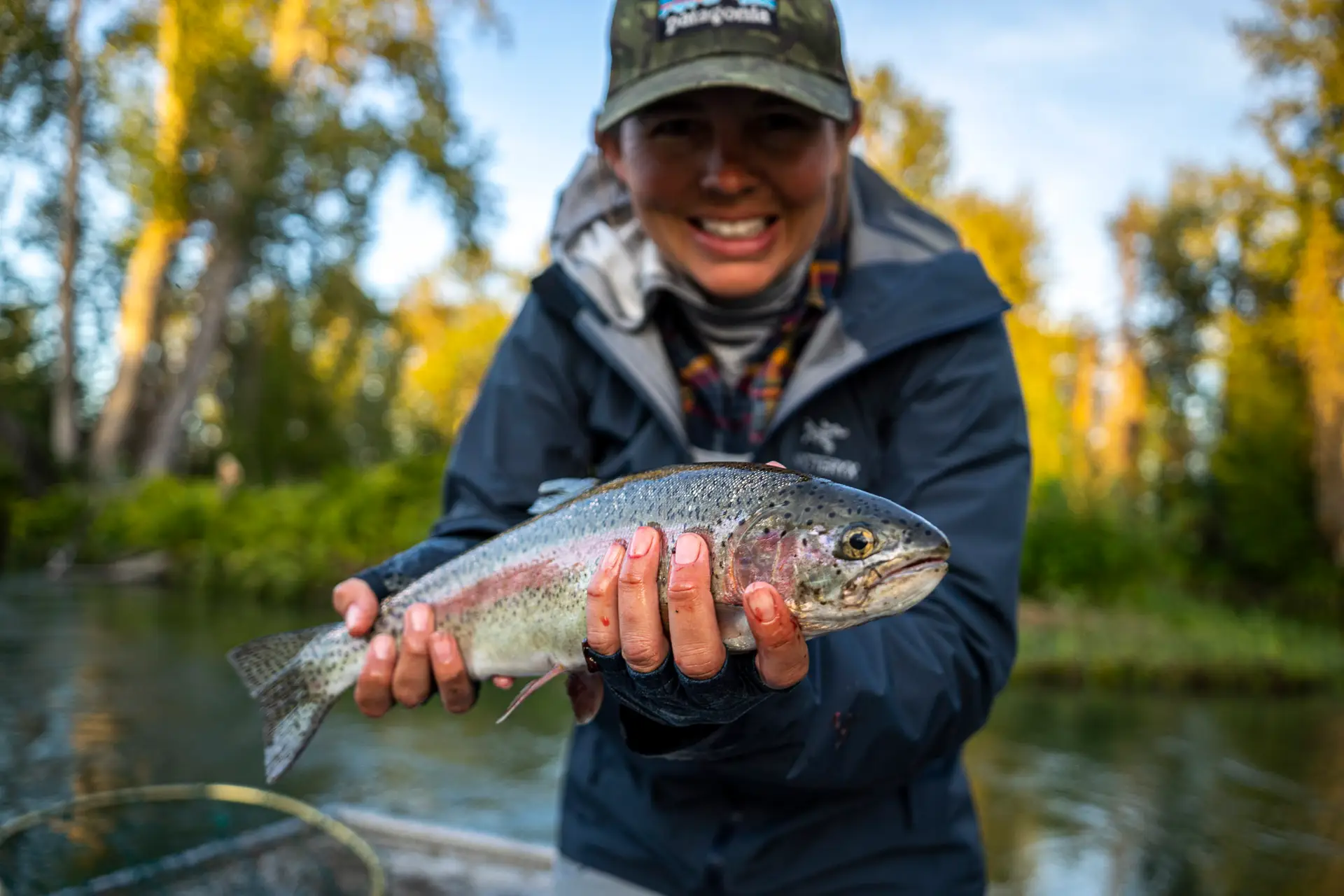
Rainbow Trout
Fun all summer
Northern Pike
Backwater predators
King Salmon · Chinook
The heavyweights of Lake Creek.
How to identify
Deep bodied salmon with a heavy head and jaw. Fresh fish are chrome with a blue green back and black spots across the back and on both lobes of the tail. Black gums at the base of the teeth are a classic Chinook giveaway.
Run timing
Kings enter Lake Creek from late May into early July. Early fish travel through deeper, faster slots. By late June they slide into softer, deeper holding water where they rest before moving on to spawning gravel.
How we fish them
We backtroll plugs such as Kwikfish or Mag Lips through prime runs, swing large intruder style flies on heavy sink tips, and run Spin N Glo and egg combinations through deeper pools. Every bite feels like catching a train.
Recommended gear
- 8 to 10 weight fly rods with strong drags.
- Heavy Skagit heads with sink tips matched to current.
- Leaders in the 25 to 40 pound range with stout hooks.
- Conventional rods with 30 to 40 pound mono or 40 to 65 pound braid.
Best for: anglers who want a few unforgettable bites rather than nonstop numbers.
Sockeye Salmon · Reds
The bread and butter late July run.
How to identify
Streamlined fish with almost no spots. Fresh sockeye are silver bright with a faint blue green back. As they approach spawning they turn deep red through the body with an olive green head.
Run timing
The main push usually arrives around the twentieth of July and carries through August. Fish move in pulses, sliding past the lodge and stacking along travel corridors and near spawning gravel.
How we fish them
This is mostly sight fishing from the bank or standing in the river. Simple small flies or light spinning rigs are drifted cleanly in front of visible fish. Polarized glasses are critical since much of the game is watching waves of Reds slide by.
Recommended gear
- 6 or 7 weight fly rods with floating lines.
- 10 to 15 pound leaders, often fluorocarbon.
- Light spinning outfits with 10 to 15 pound mono or braid.
Best for: consistent action, sight fishing, and prime fish for the table.
Chum Salmon · Dogs
Striped bulldogs that just keep pulling.
How to identify
Thick shouldered salmon with a broad tail. As they color up they show bold vertical purple and green bars and pronounced teeth that give them their dog salmon nickname.
Run timing
Chum show up with the sockeye from late July through mid to late August and use many of the same runs and gravel bars.
How we fish them
Bright chartreuse or purple flies and hardware are the go to. We swing flies across current seams or work spoons and spinners through softer holding water where Chum stack up and dig in.
Recommended gear
- 7 or 8 weight fly rods with floating or sink tip lines.
- 12 to 20 pound leaders and strong hooks.
- Medium spinning rods with 12 to 20 pound line.
Best for: anglers who want hard battles and high volume hookups.
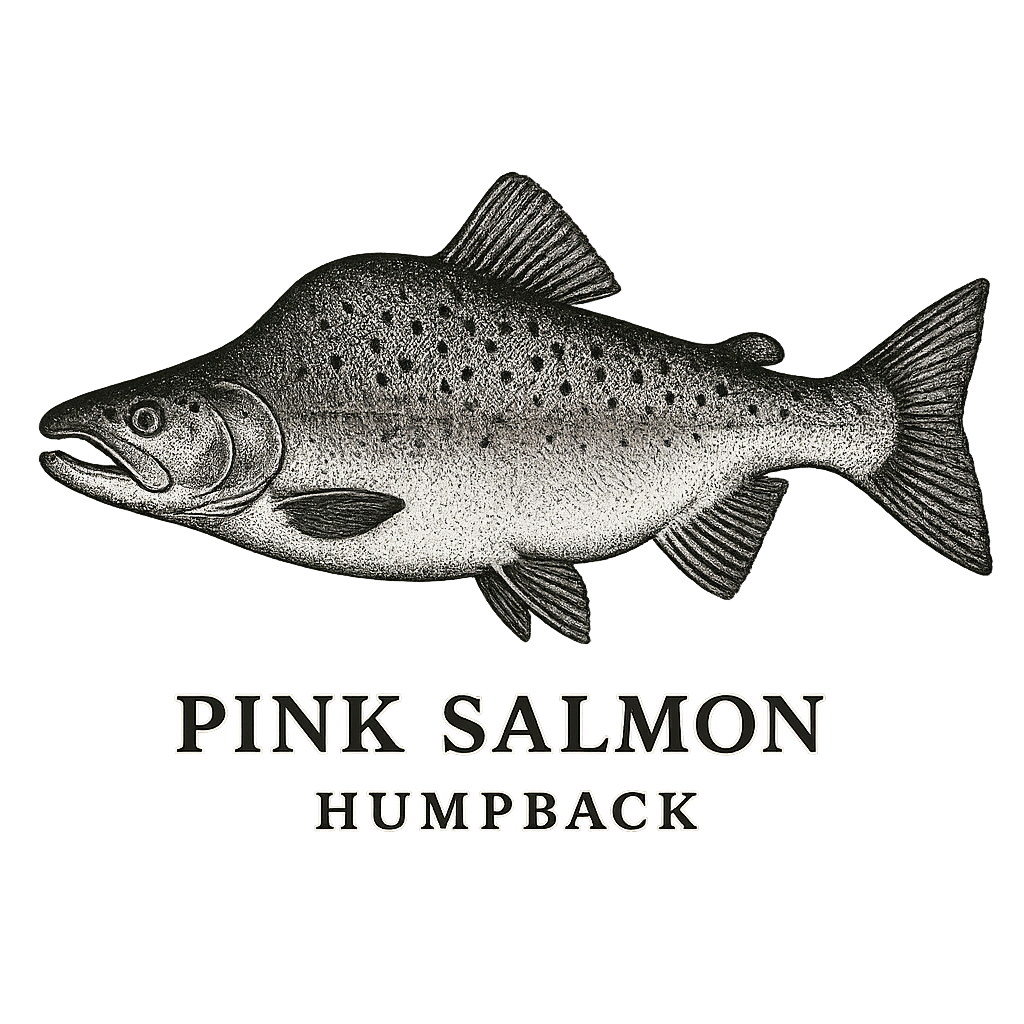
Pink Salmon · Humpy
Even year bonus rounds with near constant action.
How to identify
The smallest of the Pacific salmon here. Fresh fish are bright silver with large oval spots on the back and tail. Males in spawning colors develop the classic humped back and a hooked jaw.
Run timing
Pinks appear every year, but even numbered summers often see very strong runs. They move in big schools through July and August and can fill every seam with fish.
How we fish them
Light fly rods or ultralight spinning setups with small spoons, spinners, and simple attractor flies. Cast ahead of traveling pods and enjoy the near constant bites.
Recommended gear
- 4 to 6 weight fly rods with floating lines.
- 6 to 10 pound leaders.
- Ultralight spinning rods with 6 to 10 pound mono.
Best for: beginners, kids, and anyone who just wants to catch a lot of fish.
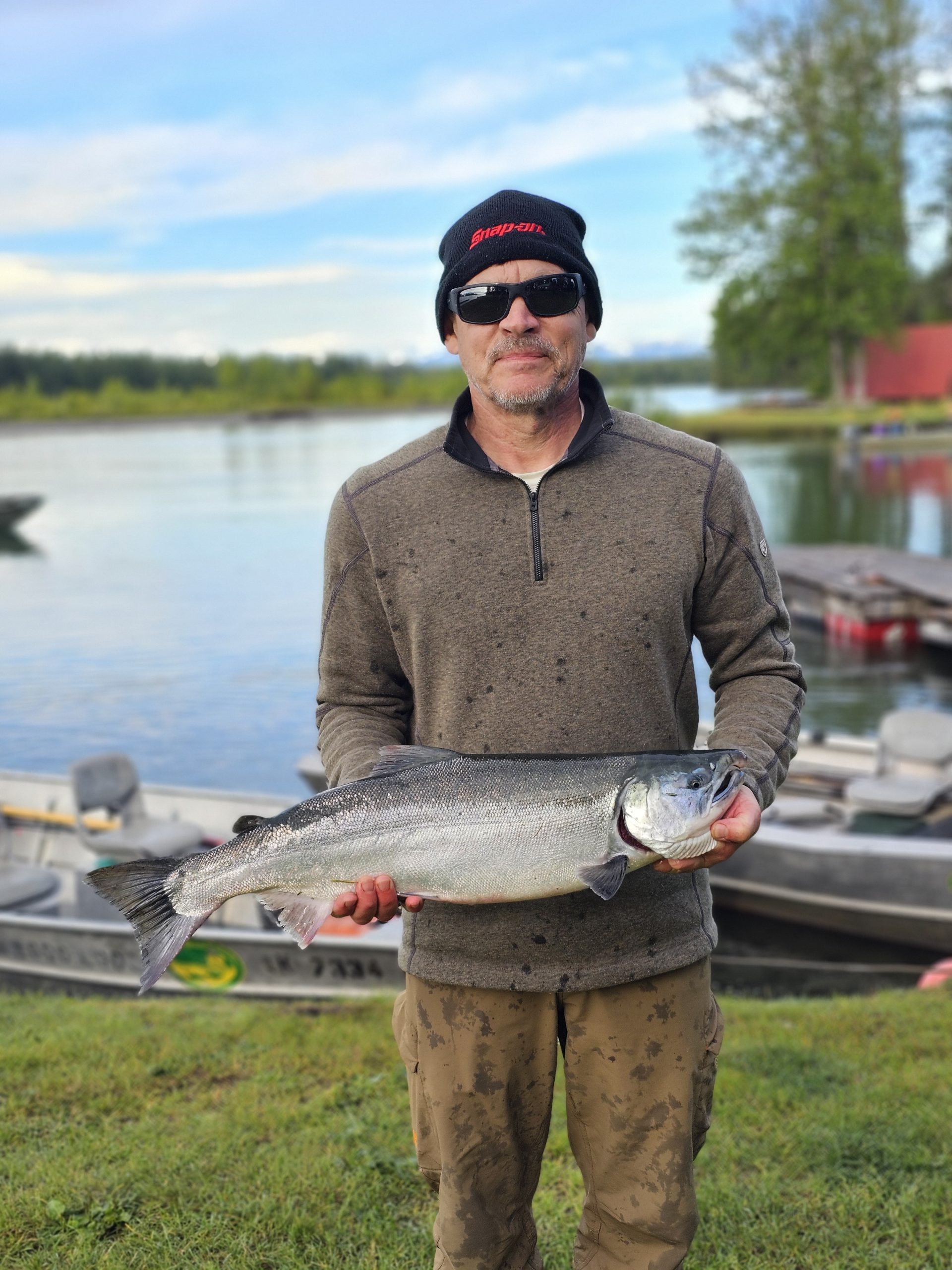
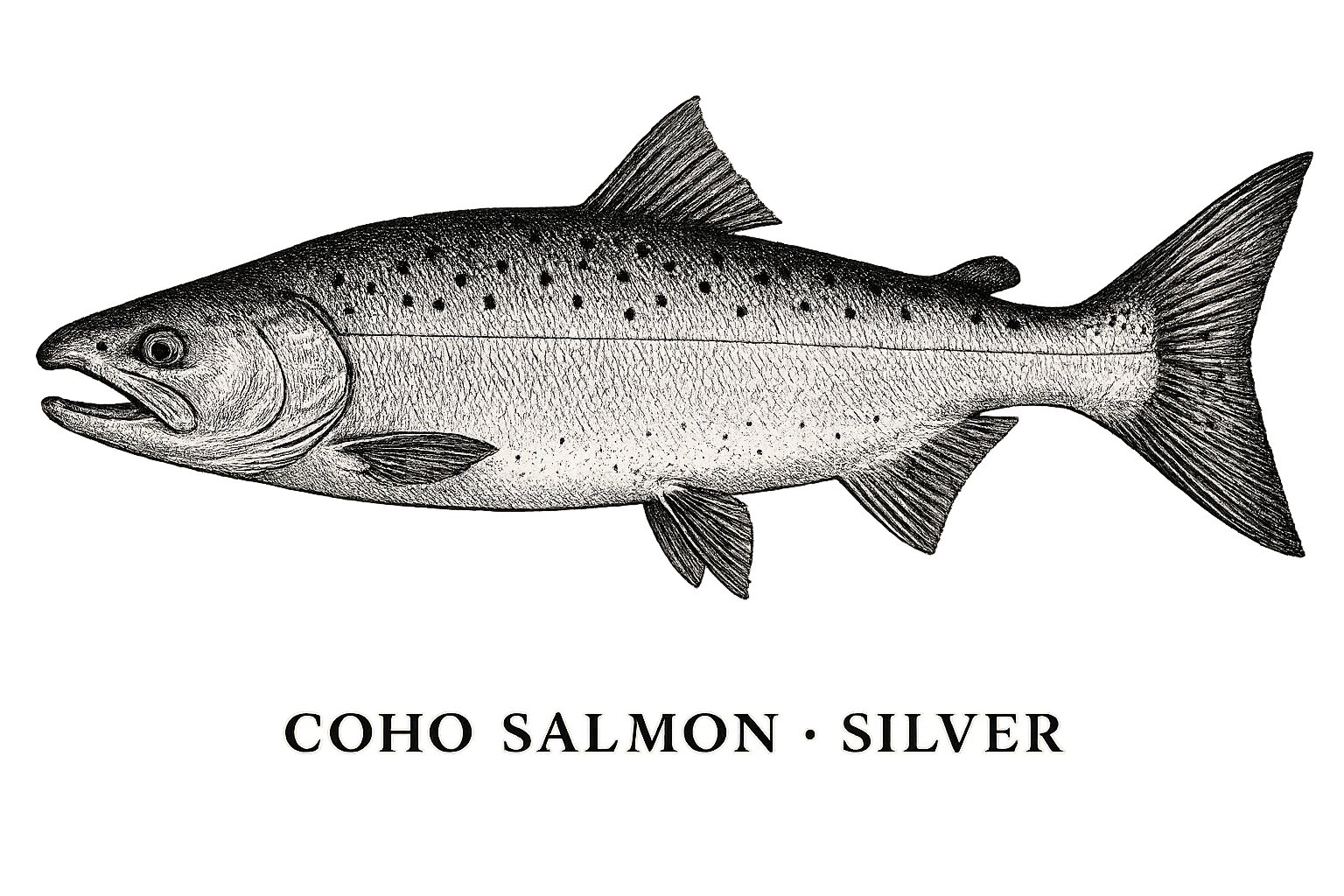
Coho Salmon · Silvers
Aggressive and aerobatic late summer favorites.
How to identify
Sleek silver fish with small black spots mostly on the upper half of the tail. White gums and a more streamlined build than Kings.
Run timing
Coho arrive from late July through August. They hold in softer edges, back eddies, and slower pools that let them rest and ambush food.
How we fish them
On fly rods we fish streamers and surface poppers on 7 or 8 weights. On conventional gear we cast spinners, spoons, twitching jigs, and small plugs. Coho are not shy and will often chase a lure right to the rod tip.
Recommended gear
- 7 or 8 weight fly rods with floating lines and a few sink tips.
- Leaders in the 12 to 20 pound range.
- Medium spinning rods with 12 to 20 pound line.
Best for: anglers who like visual eats, active casting, and acrobatic fights.
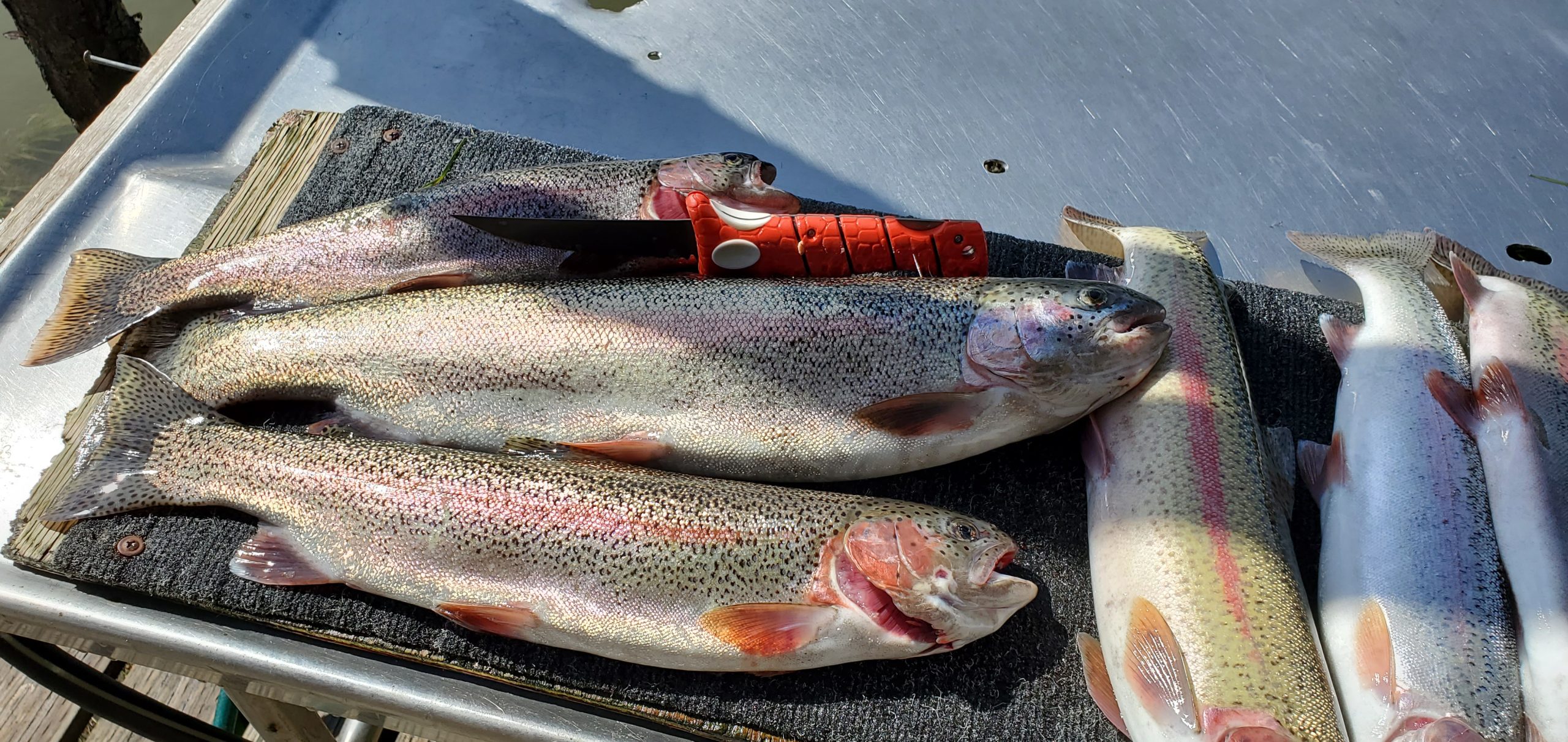
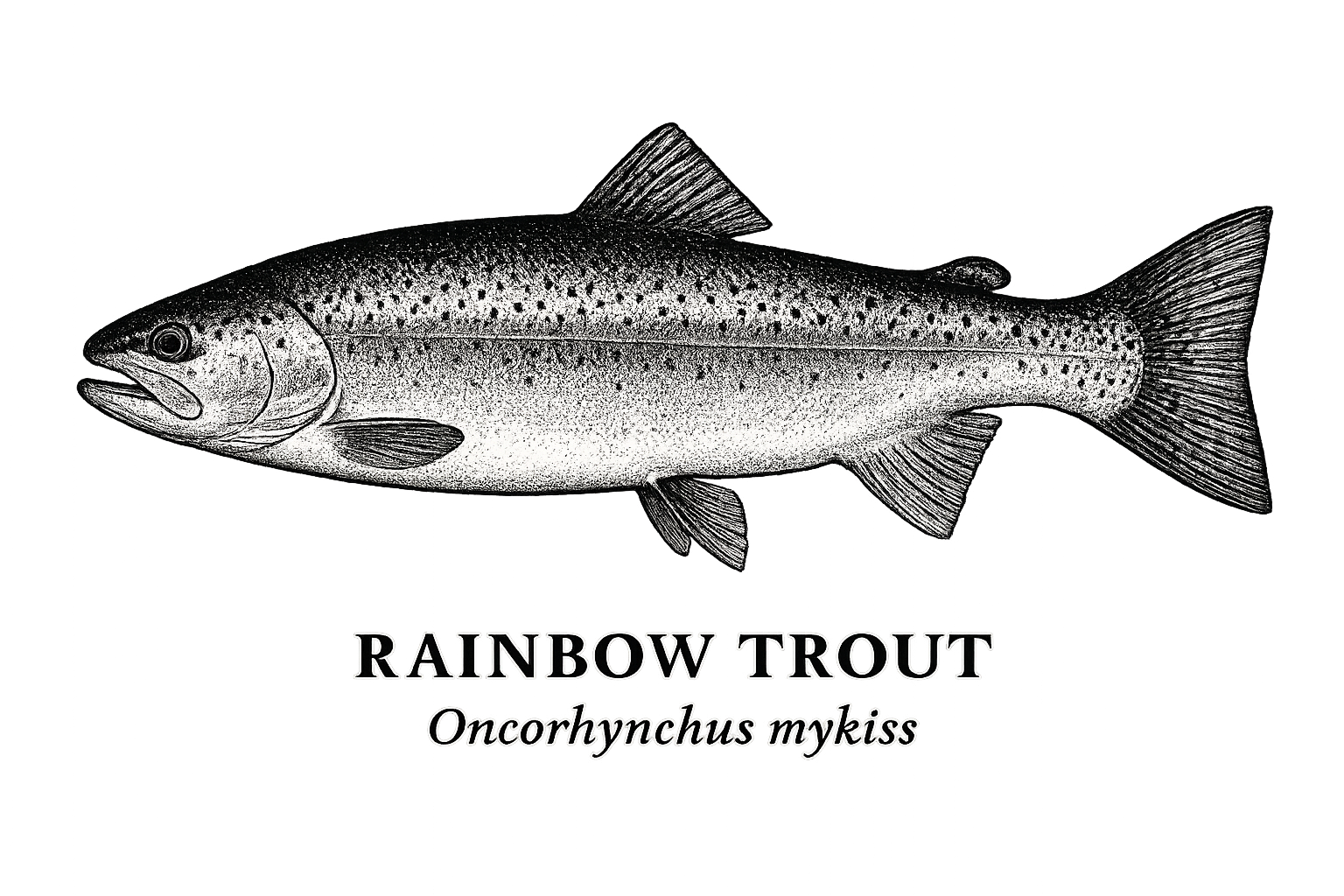
Rainbow Trout
Wild trout that grow thick on salmon smolt and eggs.
How to identify
Classic pink lateral band with black spots on the back and tail. Early season fish are chrome and athletic. Late season fish behind salmon can be heavy, colorful, and ready to test light gear.
Run timing
Rainbows are present from opening through fall. Early in the year they chase outgoing smolt and aquatic insects. During the salmon spawn they slide behind Kings and sockeye to feed on eggs and flesh. By the onset of fall, they are proper footballs.
How we fish them
Early season is about smolt patterns, streamers, and nymphs. Once salmon start dropping eggs we turn to beads and egg patterns fished under indicators or tight line style. Flesh flies also come into play as spawned out salmon break down.
Recommended gear
- 5 to 7 weight fly rods with floating lines.
- 8 to 15 pound leaders, often fluorocarbon for egg rigs.
- Light spinning outfits with 6 to 10 pound line and small spoons or spinners.
Best for: anglers who enjoy reading water and seeing how conditions change trout behavior through the season.
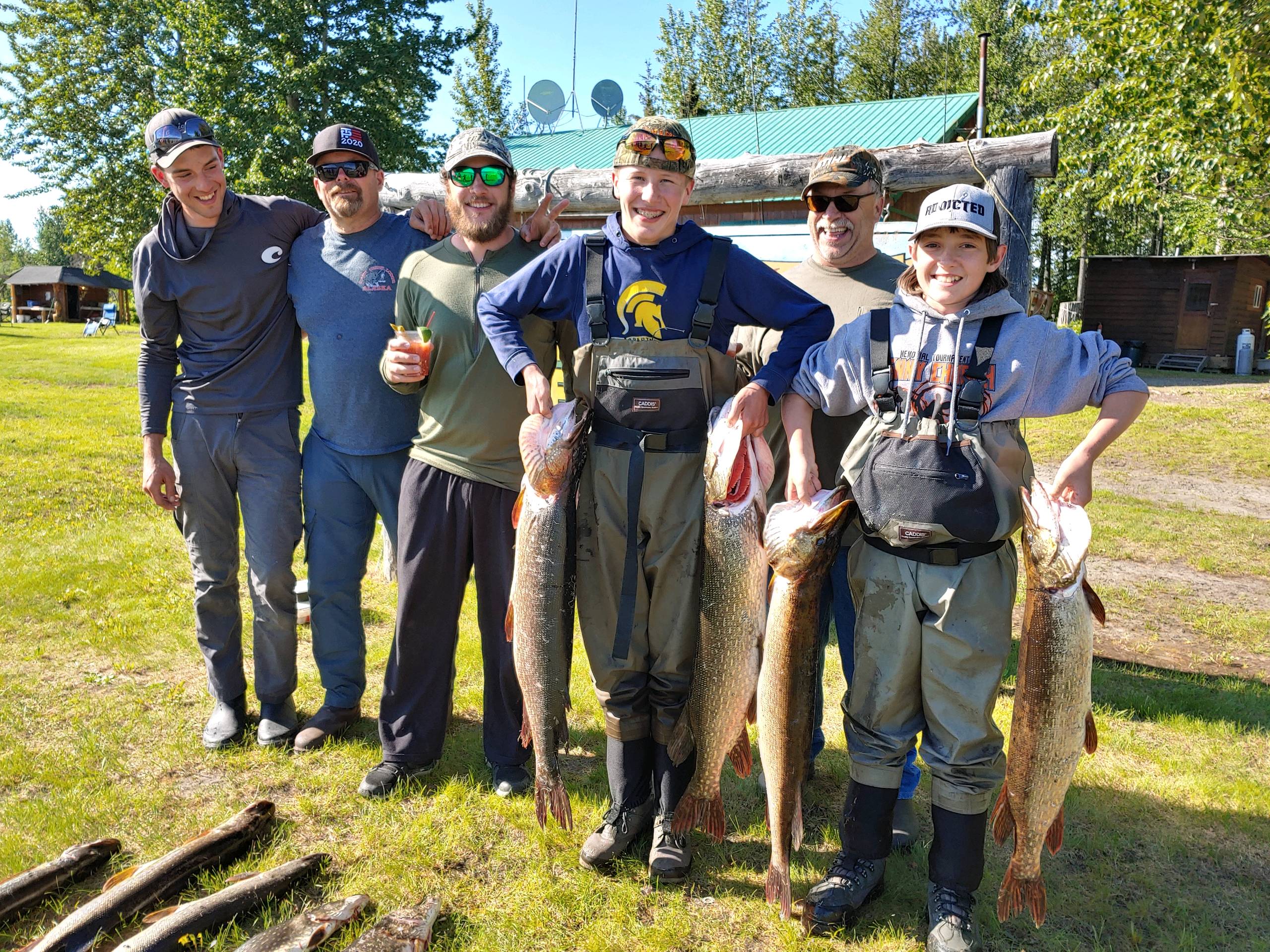
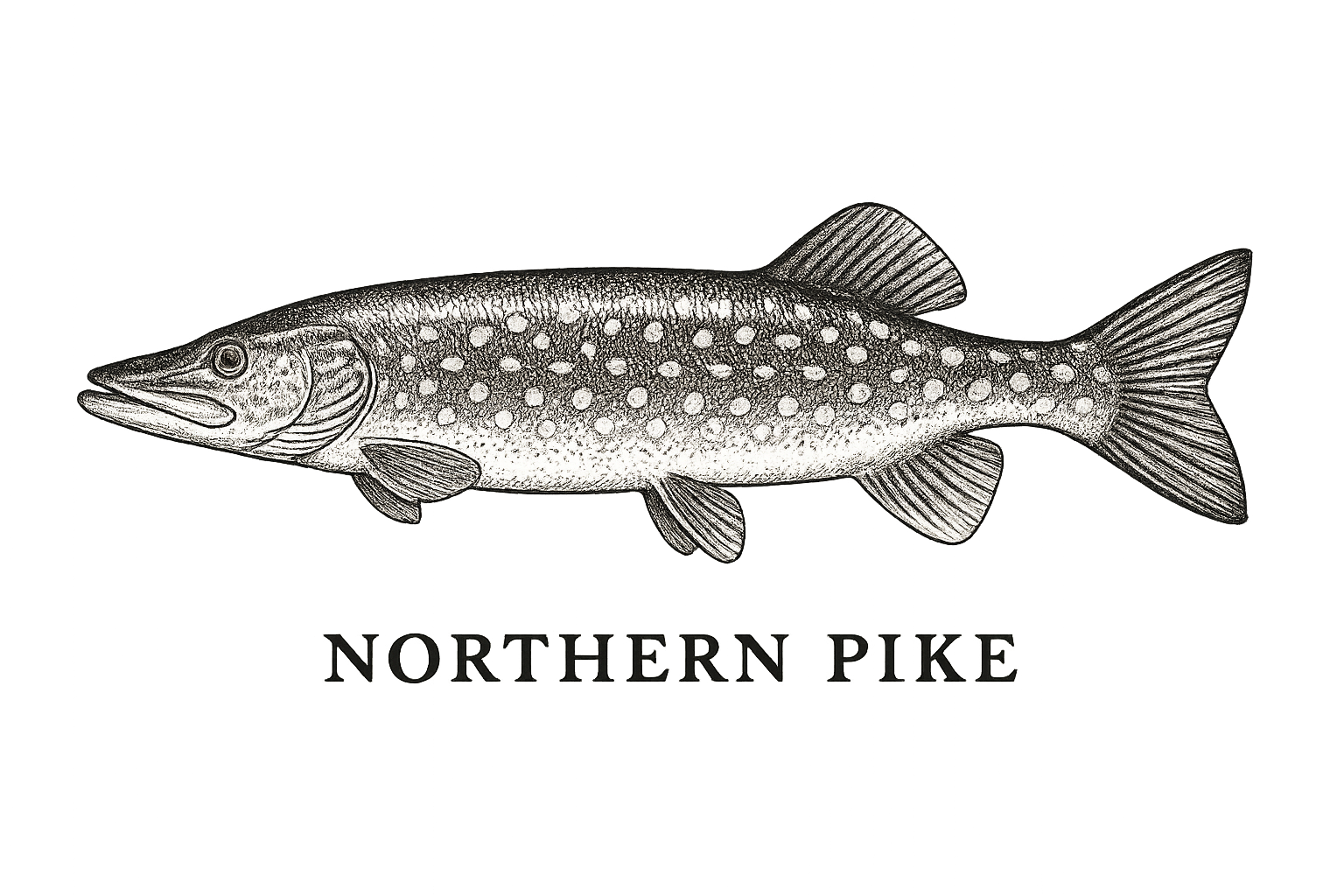
Northern Pike
Backwater predators with violent surface eats.
How to identify
Long torpedo shaped body with a duckbill snout and rows of sharp teeth. Olive back with light bean shaped spots and a pale belly. Dorsal fin set far back near the tail.
Run timing
Pike use lakes, sloughs, and weedy margins around Lake Creek. Cooler water in early June and again in late August into September often brings the largest fish into reachable water.
How we fish them
On fly rods we throw large streamers and frog patterns over weed beds. On conventional gear we cast weedless spoons, spinnerbaits, jerkbaits, and topwater frogs along edges and pockets. Eats are visual and often explosive.
Recommended gear
- 8 weight fly rods with floating lines and short, stout leaders.
- Wire or heavy fluorocarbon bite tippet in the 30 to 50 pound range.
- Medium heavy conventional rods with 30 to 50 pound braid.
Best for: anglers who love topwater strikes, heavy structure, and toothy predators.